
KD Epoxy Floor
Garage Epoxy Flooring in South Florida
KD Epoxy Floor installs garage epoxy flooring built for real daily use across South Florida, from Palm Beach County to the Florida Keys. A garage floor takes more abuse than almost any other surface in a home — hot tires, oil and coolant drips, dropped tools, and tracked-in sand — so we treat it like the working surface it is. We diamond-grind the slab, repair cracks and spalls, and apply a bonded epoxy system with a clear topcoat that resists hot-tire pickup and automotive chemicals.
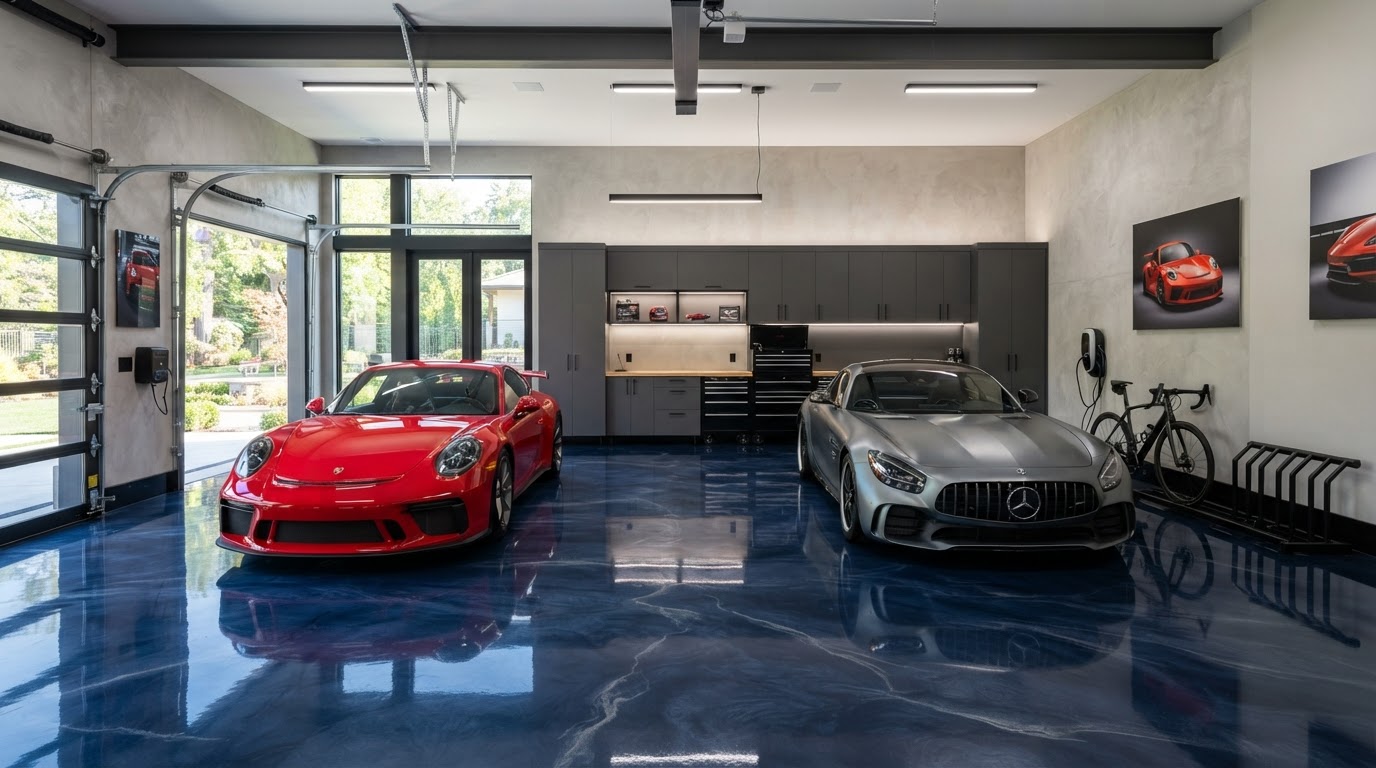
The result is a seamless, reflective floor that brightens the garage, wipes clean, and hides minor slab imperfections under color or flake. Whether you want a crisp solid color, a decorative flake broadcast that forgives everyday wear, or a showpiece metallic finish, the system is tailored to how you actually use the space. We come to your property to assess the slab and send a custom estimate — share your city or ZIP and we'll confirm availability.
Common applications
- Residential garages
- Workshops
- Car enthusiasts' spaces
- Home gyms and hobby rooms
Key benefits
- Resists hot-tire pickup and automotive chemicals
- Seamless, easy to sweep and hose down
- Brightens the space with a reflective finish
- Hides minor slab imperfections under color and flake
What garage epoxy flooring includes
A garage epoxy floor is a layered system, not a single coat of paint. The slab is mechanically profiled so the epoxy bonds to clean, open concrete rather than a contaminated or smooth surface. A pigmented basecoat delivers the color, the finish layer — flake, solid, or metallic — sets the look, and a clear topcoat seals everything against wear, chemicals, and UV from open doors.
Because the system is seamless, there are no grout lines or seams to trap grease and dirt. Spills wipe up instead of soaking in, and the reflective surface adds real light to a space that often has poor overhead lighting. For South Florida homes, that also means a surface that handles tracked-in sand and humidity without dusting or staining.
Who it is suitable for and common applications
Garage epoxy is the default choice for residential garages that get daily vehicle use, but it also suits workshops, car enthusiasts' spaces, home gyms, and hobby rooms where you want a clean, durable surface. If your garage doubles as a laundry area, playroom, or workspace, a coated floor is far easier to keep clean than bare concrete.
We install these systems for homeowners across the corridor — from coastal condos with shared garages to inland homes with two- and three-car garages. The finish choice is what adapts the system to the use: flake for high-traffic forgiveness, solid for a crisp modern look, metallic for a statement floor.
Available finishes and how to choose
Solid color epoxy delivers a uniform, contemporary surface in a single color with a high-gloss or satin topcoat. It reads clean and modern but shows scuffs more easily, so it suits showrooms and lighter-use garages.
Decorative flake flooring broadcasts vinyl chips into the basecoat and seals them under a clear topcoat. The flake adds texture and hides dirt, scuffs, and minor slab flaws — the most forgiving choice for a garage that gets daily use.
Metallic epoxy uses shimmering pigments for a dimensional, flowing finish. It is a showpiece look for a premium garage or a car enthusiast's space where the floor is part of the display.
Finish options at a glance
- Solid color — uniform, modern, high-gloss or satin
- Decorative flake — textured, forgiving, wide color range
- Metallic — dimensional, high-gloss, statement finish
- Anti-slip aggregate — addable to any topcoat for wet areas
Preparation and what to expect
Preparation is the most important step in a lasting garage floor. We assess the slab for moisture, check any existing coating for adhesion, then diamond-grind to open the surface and remove contaminants. Cracks, joints, and spalls are repaired so the coating bridges a sound substrate.
Expect the space to be cleared and the vehicle out for the work and the cure window. Pedestrian traffic is usually fine within a day; full cure before vehicle parking takes longer and depends on the product. Your estimator gives you the exact timing for your system and conditions.
Why South Florida garages need the right system
Heat and humidity change how coatings behave. Hot tires can soften a poorly bonded coating and lift it, and high humidity can trap moisture in a slab that wasn't tested. We account for both by profiling every slab, testing for moisture, and choosing products rated for the climate. A garage floor that looks great for a season and peels the next is almost always a preparation failure, not a product failure.
We also keep the finish independent of the website's interface colors — your floor color is your choice, not our brand palette. Samples guide the final selection because on-screen colors are approximate.
Garage epoxy versus bare concrete, tiles, and mats
Bare concrete dusts, stains, and absorbs oil — a coated floor wipes clean and stops the dusting that coats everything in a garage. Interlocking tiles look good but have seams that trap dirt and can lift at the edges; a seamless epoxy system has none. Roll-out mats protect spots but shift under traffic and hold moisture underneath, which can damage the slab.
The advantage of epoxy is that it bonds to the slab and becomes part of the surface. The investment is the preparation and the product; the payoff is a floor that does not shift, lift, or trap debris. For a garage you use every day, that is the difference between a floor that lasts and one that needs replacing.
What to expect on installation day
Clear the garage completely — vehicles, stored items, and anything on the floor. The slab needs to be dry and at temperature for the coating to bond. We grind, repair, and coat in sequence, and the space is off-limits during the cure window. We tell you the exact timing for your system so you can plan around it, including when it is safe to walk on it and when you can park on it.
After cure, the floor is ready for daily use. Keep it swept, mop with a neutral cleaner, and wipe up oil promptly. The topcoat is the wear surface — if it dulls over time in high-traffic areas, a recoat restores it without redoing the whole floor.
How the process works
We diamond-grind the slab, repair cracks and spalls, and test for moisture before any coating goes down.
- 01Assess the slab, moisture, and existing coating
- 02Diamond-grind and profile the surface
- 03Repair cracks, joints, and spalls
- 04Apply basecoat, broadcast finish, and clear topcoat
Cost factors
- Square footage
- Slab condition and required repairs
- Finish system (solid, flake, or metallic)
- Existing coating removal if needed
Care & aftercare
- Sweep regularly; mop with a neutral cleaner
- Wipe up oil and chemicals promptly
- Avoid abrasive pads that can dull the topcoat
Frequently asked questions
Pedestrian traffic is usually fine within 24 hours, but wait for full cure before parking vehicles — your estimator will give you the exact timing for your system. Most systems reach vehicle-ready cure in about three to seven days depending on product and conditions.
Request garage epoxy flooring
Tell us about your project and we'll check whether we cover your exact address, walk you through finish options, and send a custom estimate. We come to your property — share your city or ZIP and we'll take it from there.