
KD Epoxy Floor
Diamond Concrete Preparation & Polishing in South Florida
KD Epoxy Floor handles diamond concrete preparation and polishing across South Florida — two related but distinct operations. Diamond grinding prepares a slab for coating by opening the surface and removing contaminants so the coating bonds. Polishing takes the concrete further, refining it into a dense, reflective, low-maintenance finished floor with no coating on top.
Prep is about adhesion; polish is about the finish. We keep the two distinct because they serve different goals — a coating needs a profiled surface, while a polished floor needs a refined one. We come to your property to assess the slab and send a custom estimate — share your city or ZIP and we'll confirm availability.
Common applications
- Coating prep
- Polished concrete floors
- Retail
- Warehouses
Key benefits
- Removes old coatings and contaminants
- Opens the surface for adhesion
- Polished floors are dense and reflective
- Low maintenance
What diamond preparation and polishing include
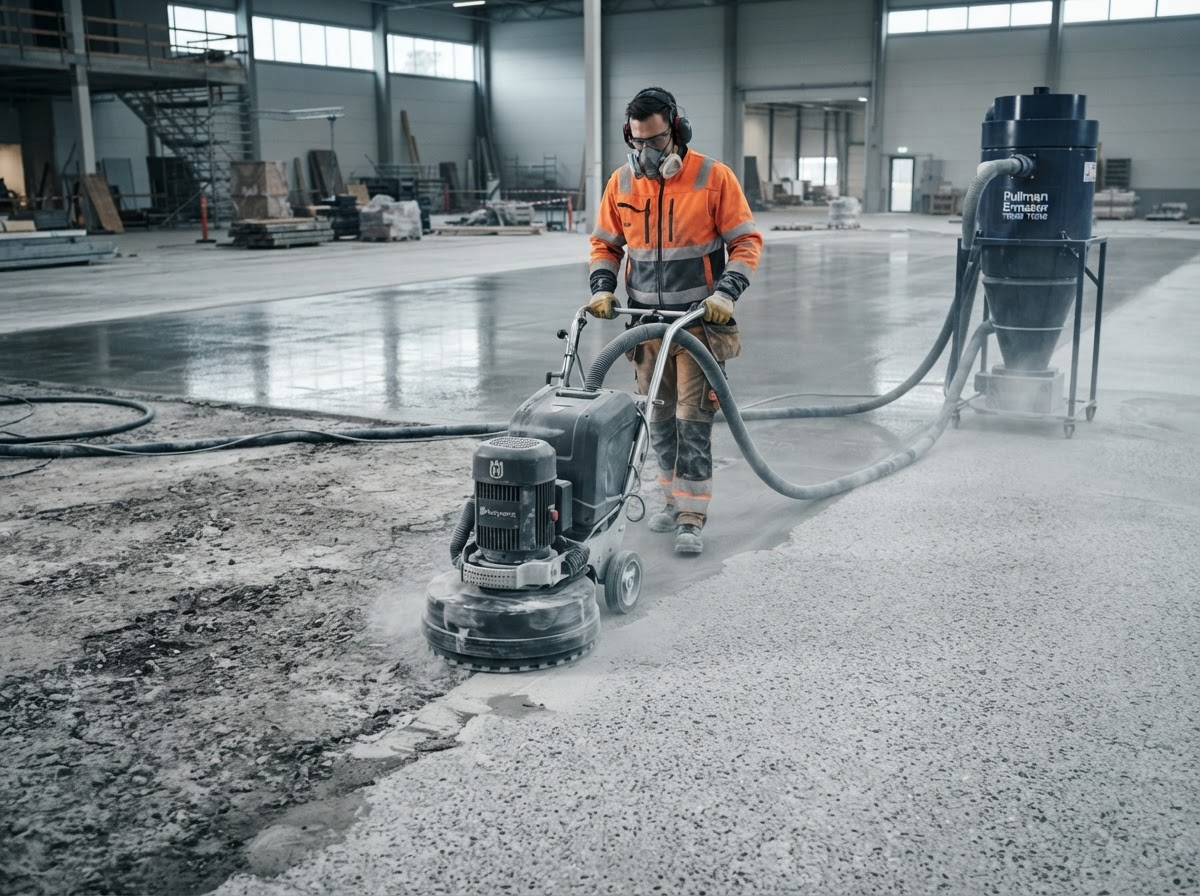
Diamond grinding is mechanical preparation: coarse abrasives open the concrete surface and remove old coatings, contaminants, and laitance. The result is a profiled surface that a coating can bond to. This is the preparation step that makes every coating system last — without it, the epoxy sits on a smooth or contaminated surface and lifts.
Polishing is a multi-step refinement: progressively finer abrasives refine the concrete into a dense, reflective surface, then a densifier hardens it. The result is a finished floor with no coating — the concrete itself is the wear surface. That is the appeal: nothing to recoat, nothing to peel, and a surface that gets denser with use.
Who it is suitable for
Prep grinding is for any slab that will be coated — it is the foundation of a lasting epoxy floor, and we do it on every coating project. Polishing is for spaces that want the look and low maintenance of refined concrete: retail floors, warehouses, and modern homes where a coating is not the goal.
We assess the slab before recommending a polish level, because the condition of the concrete determines how much refinement it needs and what gloss it can reach. A slab with heavy wear or aggregate exposure takes more work than a clean, smooth pour.
Prep versus polish — and how to choose
If you are coating the floor, you need prep grinding — it is not optional for adhesion. If you want a finished concrete floor with no coating, you want polishing. They are different operations with different ends, and we keep them distinct so the right one is done for the right reason.
Polishing can be taken to a honed matte, a satin sheen, or a high-gloss reflective finish depending on the refinement steps. Higher gloss takes more steps and a denser slab, so we assess the concrete before recommending a level.
Prep and polish levels
- Prep grind — profile for coating adhesion
- Honed — matte, refined concrete
- Polished — satin to high-gloss reflective finish
- Densifier — hardens and protects the surface
Preparation and what to expect
We assess the slab and any existing coatings, then coarse-grind to profile or remove. For polishing, we follow with progressive refinement and a densifier. The space is dusty during grinding and needs to be cleared and ventilated.
Expect a mechanical process — it is loud and creates dust, which we manage with containment and cleanup. The result is a surface ready for coating or a finished polished floor, depending on the scope. We tell you the timeline based on the slab and the gloss level.
Why prep grinding is non-negotiable for coatings
A coating bonds to the surface profile. A smooth or contaminated slab gives the epoxy nothing to grab, and the coating lifts under traffic — especially under hot tires in a garage or forklift loads in a warehouse. Diamond grinding creates the mechanical profile the coating needs, which is why it is the first step of every floor we install.
Skipping prep to save time or cost is the most common reason coatings fail. We grind every slab we coat, whether it is a residential garage or a commercial warehouse, because the preparation is what makes the product perform.
Polished concrete as a finished floor
Polished concrete is a finished floor in its own right — no coating, no topcoat to maintain, and a densified surface that resists wear. For retail and warehouse spaces that want a clean, reflective look without the recoat schedule of an epoxy, polishing is the lower-maintenance choice.
The densifier is what makes it durable: it reacts with the concrete to harden the surface, so the floor gets denser with use rather than wearing away. That is why a polished floor stays looking good with dust-mopping and occasional repolishing rather than a full recoat.
Care for a polished concrete floor
Dust-mop regularly, use neutral cleaners, and repolish as needed to restore gloss. There is no topcoat to recoat, which is the appeal — a polished floor is low-maintenance and the maintenance is mechanical, not chemical. Avoid harsh cleaners that can etch the densified surface.
For South Florida retail and warehouse floors, that means a surface that stays looking finished through foot traffic and pallet drag without the downtime of a recoat. We can set a repolish schedule based on the traffic.
How the process works
Grinding is the preparation step; polishing is a multi-step refinement to the desired gloss.
- 01Assess the slab and existing coatings
- 02Coarse grinding to profile or remove
- 03Progressive refinement for polish
- 04Densify and protect the surface
Cost factors
- Slab condition
- Desired gloss level
- Square footage
Care & aftercare
- Dust-mop
- Use neutral cleaners
- Repolish as needed
Frequently asked questions
Prep grinding opens the surface for a coating to bond. Polishing refines the concrete itself into the finished floor — no coating on top. They are different operations with different ends, and we keep them distinct so the right one is done for the right reason.
Request diamond concrete preparation & polishing
Tell us about your project and we'll check whether we cover your exact address, walk you through finish options, and send a custom estimate. We come to your property — share your city or ZIP and we'll take it from there.