
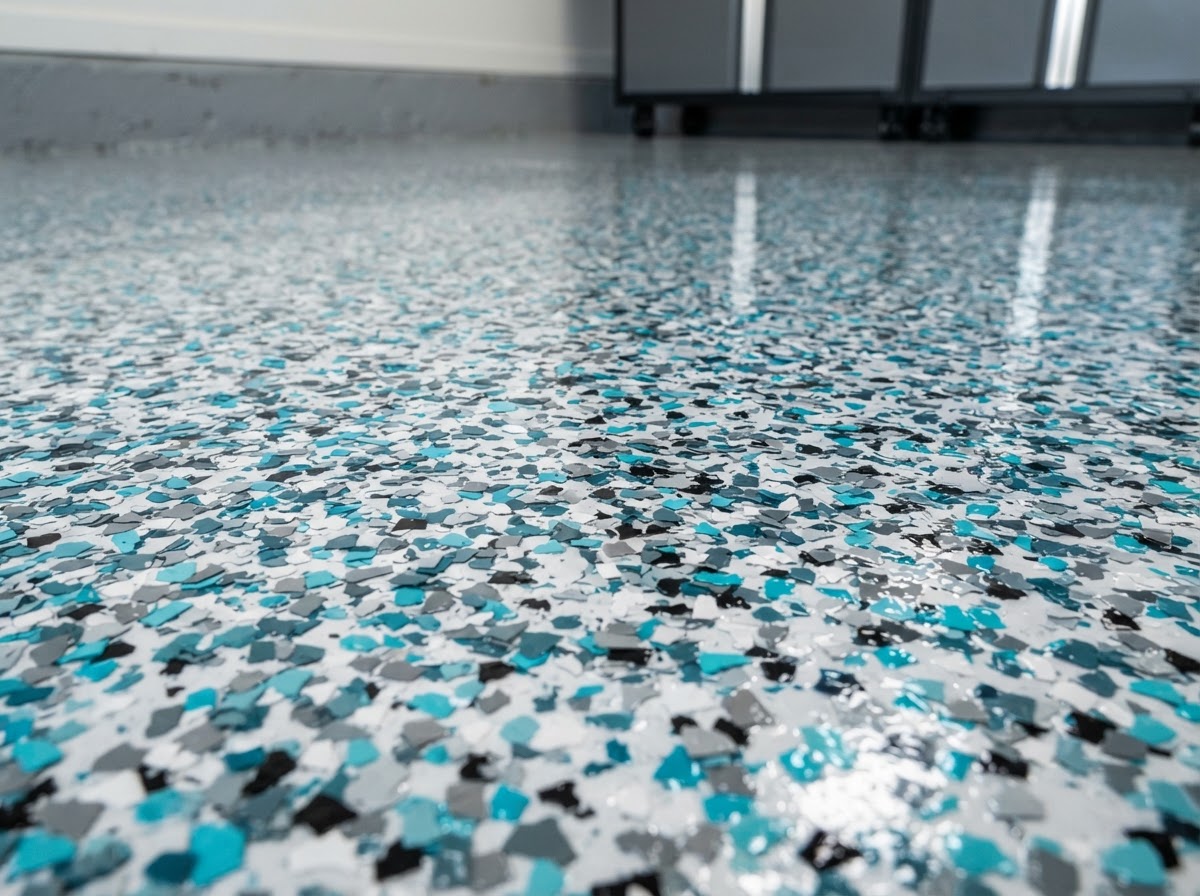
Flake Flooring Mistakes, Misconceptions, and How to Avoid Them
The common mistakes that undermine decorative flake floors — from wrong flake size to poor prep — and how to prevent them before you install.
Decorative Flake Flooring
2026-10-15
Decorative flake flooring is forgiving by design — the multi-color texture hides the wear that would show plainly on a solid color. But that forgiveness only works when the floor is installed correctly. The mistakes that undermine a flake floor are the same as any epoxy system — skipped prep, unrepaired cracks, ignored moisture — plus a few flake-specific errors like choosing the wrong size for the use or broadcasting unevenly. Understanding these mistakes is the best way to avoid them.
KD Epoxy Floor installs decorative flake flooring across South Florida, from Palm Beach County to the Florida Keys. We've built our process to prevent every one of these failures. Here are the mistakes we see most often, the misconceptions behind them, and how to make sure your flake floor doesn't fall victim to them.
Mistake 1: Choosing the wrong flake size for the use
Fine flake in a high-traffic garage hides less wear than the space demands, and the floor shows scuffs within weeks. Full flake in a clean living space reads as too busy and too textured for the aesthetic. The mistake is choosing the flake size based on a photo rather than the actual use — because the size determines both the look and the forgiveness, and the wrong size for the space is a floor that either wears faster than it should or looks wrong in the room.
The fix is matching the size to the traffic. For a garage that gets daily vehicle use, medium or full flake hides the most wear. For a clean showroom or a living area, fine flake delivers the texture without the busy pattern. We bring samples and help you choose based on how you actually use the space, not just how it looks in a catalog.
Mistake 2: Skipping the slab preparation
A flake floor bonds to a prepared slab. Without diamond grinding, the basecoat sits on a smooth or contaminated surface and lifts under traffic — the flake goes with it. The misconception is that the flake texture hides preparation failures. It doesn't; it hides everyday wear, but a coating that isn't bonded will lift regardless of what's on top of it.
We grind every slab before the basecoat goes down, because the preparation is what makes the flake system bond. A flake floor on an unprepared slab is a flake floor that will peel — and the peeling happens under the flake, where it's visible and where it can't be repaired without removing the whole system.
Mistake 3: Uneven flake broadcast
If the flake is broadcast unevenly — heavy in some areas, sparse in others — the floor reads as patchy and inconsistent. The mistake is rushing the broadcast or using the wrong technique, and it shows in the finished surface as visible variation in density and color. A proper broadcast distributes the chips evenly across the wet basecoat so the texture is consistent from edge to edge.
The fix is experience and technique. We broadcast to the chosen density — fine, medium, or full — with even coverage across the entire surface. For a full flake broadcast, we throw to refusal, saturating the surface until the basecoat can hold no more, then scrape the excess. The result is a uniform, multi-color surface without patches or bare spots.
Mistake 4: Coating over moisture or a failing slab
A flake floor applied over a moist slab can blister and delaminate as moisture vapor pushes through the surface. A flake floor applied over a failing existing coating lifts with the old coating underneath it. The misconception is that the flake system is thick enough to bridge these problems. It isn't — no coating system bonds to a compromised substrate.
We test for moisture and test existing coating adhesion before any flake goes down. If the slab has high moisture, we address it first. If the existing coating is failing, we remove it first. See our existing coating removal for the removal scope. The flake system is only as durable as the slab it bonds to.
Common flake flooring mistakes
- Wrong flake size for the use → match size to traffic
- Skipping the grind → always prepare the slab
- Uneven broadcast → even coverage, proper technique
- Coating over moisture → test and address first
- Coating over failure → test adhesion, remove if failing
- Rushing the cure → respect the cure window
Mistake 5: Choosing the wrong topcoat
A standard interior topcoat on a sun-exposed patio will chalk and fade within a season. A smooth topcoat on a wet pool deck is a slip hazard. The mistake is selecting the topcoat based on cost alone rather than the exposure — because the topcoat is the wear surface, and the wrong topcoat for the environment is a floor that fails at the surface even when the basecoat is sound.
We match the topcoat to the use: standard for interior spaces, heavy-duty for high-traffic areas, UV-stable for exterior or sun-exposed applications. For wet areas, we add an anti-slip aggregate to the topcoat. See our slip-resistant flooring systems for the traction options. The right topcoat is what makes the flake system perform in the environment it's installed in.
Mistake 6: Rushing the cure window
A flake floor that's walked on, driven on, or loaded before it's fully cured is a floor that gets damaged before it reaches its strength. The misconception is that the floor is done when the topcoat is dry to the touch. It isn't — dry to the touch is not full cure, and full cure is what gives the floor its resistance to traffic and chemicals.
Pedestrian traffic is usually fine within 24 hours, but full cure takes longer — typically three to seven days depending on the product and conditions. We tell you the exact timing for your system so you can plan around it. Rushing the cure is how a flake floor that should last years gets damaged in the first week.
How to make sure your flake floor doesn't fail
Every mistake above is preventable with the right process. We grind every slab, repair every crack, test for moisture, match the flake size to the use, broadcast evenly, select the right topcoat, and respect the cure window — because each step is what makes the flake floor last. The estimate is where we identify what your floor needs, and the installation is where we deliver it.
Share your city or ZIP and we'll confirm availability before scheduling the assessment. We serve South Florida from Palm Beach County to the Florida Keys, and we'll tell you honestly whether your area is within our working scope before we book the estimate.
Frequently asked questions
Why do flake floors peel?
Almost always because of preparation failure — the slab wasn't ground, the crack wasn't repaired, moisture wasn't tested, or a failing existing coating was coated over. The flake system bonds to the slab, and if the slab is compromised, the flake goes with it.
Can I install flake flooring myself?
DIY flake kits are available, but they skip the preparation that makes the floor last and the technique that makes the broadcast even. Without diamond grinding and proper broadcast technique, a DIY flake floor will lift and look patchy. The cost of professional installation is the cost of a floor that lasts and looks consistent.
What happens if the flake is broadcast unevenly?
The floor reads as patchy — heavy in some areas, sparse in others — with visible variation in density and color. A proper broadcast distributes the chips evenly across the wet basecoat so the texture is consistent. Uneven broadcast is a technique failure that shows in the finished surface.
Will the flake color fade?
We use UV-stable chips and topcoats for exterior or sun-exposed areas. For interior applications, fading is not a concern. For full-sun patios or pool decks, we confirm the right UV-stable product for the exposure, and a recoat on schedule restores the finish before fading becomes a problem.
What's the biggest mistake with flake flooring?
Choosing the flake size based on a photo rather than the actual use. The size determines both the look and the forgiveness — fine flake in a high-traffic garage wears faster than it should, and full flake in a clean living space looks too busy. We help you match the size to the real traffic.
Do you serve my area?
We serve South Florida from Palm Beach County to the Florida Keys. Share your project city or ZIP and we'll confirm availability before scheduling your estimate.
Want a flake floor that lasts? Request a custom estimate and we'll do the preparation right.
More about Decorative Flake Flooring
What Is Decorative Flake Flooring? Suitability and Common Questions
A clear guide to decorative flake epoxy flooring — what it is, where it works best, and the questions homeowners ask before choosing it.
Flake Flooring Options, Comparisons, and Cost Factors
How flake sizes, colors, and systems compare to solid color and metallic — and what drives the cost of a decorative flake floor.
Flake Flooring Preparation, Process, and Care
The step-by-step installation process for a decorative flake floor — from slab prep through topcoat — plus the care routine that keeps it looking new.